



THE TERRIER GROUP
EXTRAORDINARY EGOTISTS!
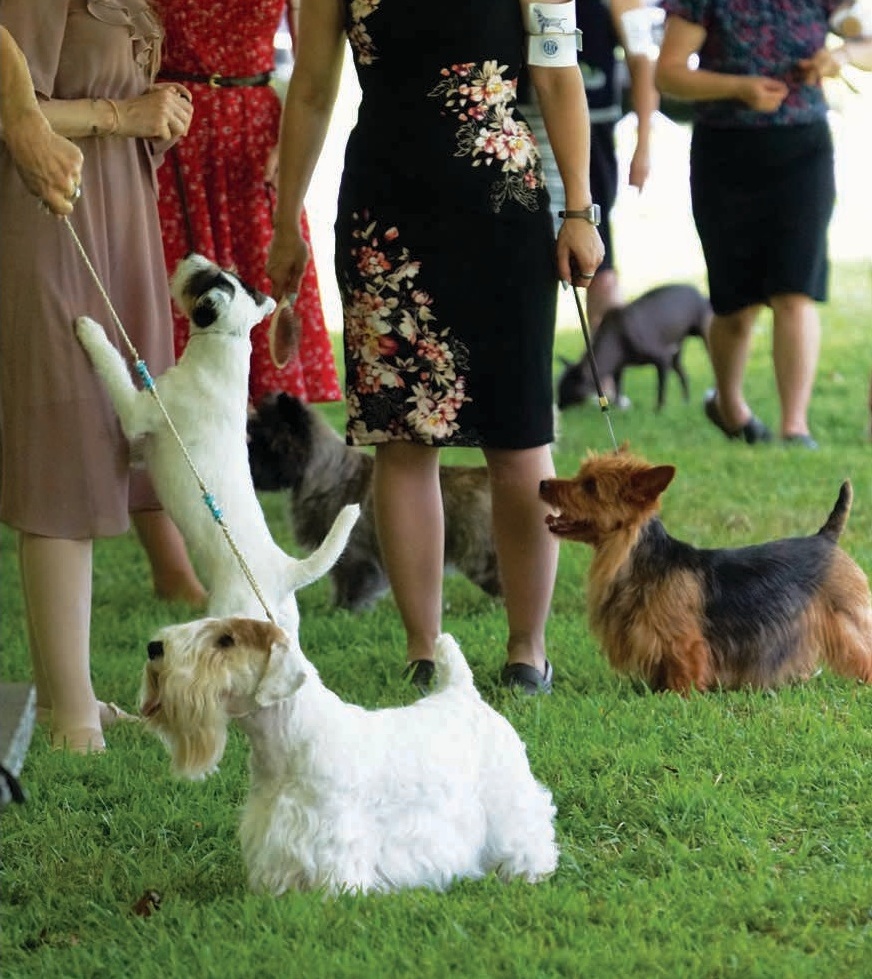
M ost dogs like to get their paws dirty, but few canines truly dig in with the sort of gusto demonstrated by the breeds of the Terrier Group. With a fervor matched only by that of the creatures they pursue, terriers get down to it with wild abandon. They are genuine warriors. Gladiators, in fact. Fearless in the face of adversaries, they are never feckless and most would rather die than “say when.” Their tenacity is nothing short of extraordinary.
Tenacious is what most terriers are, but individually, each breed is more nuanced. The Australian Terrier is a “spirited” dog, developed Down Under for work on the waterfront, in the gold mines, and on sheep stations. The lithe and graceful Bedlington Terrier is “mild and gentle” in repose but “full of immense energy and courage” when it transforms itself from a lamb to a lion. The “unrefined” Glen of Imaal Terrier possesses “antique” features and has been known to turn a mean spit (seriously). The distinctively marked Manchester Terrier is a black and tan gentleman with a “sleek” appearance and a “discerning” nature. And the West Highland White Terrier is “alert, confident, courageous, self-reliant, and friendly” with “no small amount of self-esteem.” Now that’s a terrier!
Some terrier breeds descend from true hybrids. The American Staffordshire Terrier, Bull Terrier, Miniature Bull Terrier, and Staffordshire Bull Terrier share a similar history as descendants of an amalgam of terrier and bulldog combinations. The early “half-and-halfs” were originally bred for bull- and bear-baiting, and were later used nefariously to battle one another in pits. Intentional breeding through the years has tempered the fighting instinct in these terriers, so much so that one descendent has ever been considered the “American Gentleman” for well over a century.
The Boston Terrier traces its ancestry to those early bull-and-terrier crosses, but it does not compete in the Terrier Group. In fact, a number of non-terriers have “Terrier” in their name, including the Working Group’s Black Russian Terrier, the Non-Sporting Group’s Tibetan Terrier, and the Biewer Terrier, Toy Fox Terrier, and Yorkshire Terrier of the Toy Group. (Manchesters not exceeding 12 pounds also compete in AKC’s Toy Group.) Miniature Schnauzers are terriers by another name, and did you know the Standard Schnauzer was once considered a terrier? The Lhasa Apso, too!
Through the articles and interviews assembled in this issue, SHOWSIGHT has endeavored to celebrate the extraordinary egotists of the Terrier Group through the words of the breeders, judges, and exhibitors who know them best. We hope you enjoy!


GLORIOUS MONTGOMERY!
SPARRING… WITH QUALITY TO SPARE
S ince 1929, the Montgomery County Kennel Club has been showcasing the nation’s top terriers in a one-day spectacular that is unlike any other dog show in America. This year’s event, held once again in Macungie, Pennsylvania, will likely be remembered not only for the quality of the dogs that competed in each and every ring but also for the idyllic temperatures and abundant sunshine that generously warmed the grounds as well as the hearts of every devoted dog person in attendance. The weather this year was perfection, and even the dogs that sparkled and sparred to everyone’s delight seemed to particularly enjoy their moment en plein air.
Seventeen rings welcomed onlookers throughout the day, and in every direction there was no shortage of exceptional breed type on display. At this singular show, most every ring is adorned with banners and trophy tables to complement the dogs themselves. Thirty-three Breeds or Varieties were represented at this year’s celebration, with Cairns topping the list with 122 entries. Norwich (85), Kerry Blues (84), and Scotties (81) also had respectable entries. So too did Mini Schnauzers (76), Borders (75), Smooth Fox (62), and Airedales (60). Perhaps most notable were the entries in breeds that are not often seen at a dog show. Three American Hairless Terriers were entered this year, as were five Manchester Terriers, seven Cesky Terriers, and 14 Rat Terriers.
The 2024 Montgomery judging panel was headed by the legendary Lydia Coleman Hutchinson who selected this year’s Best in Show winner and Best Brace in Show winners. Best Bred-By Exhibitor was judged by Allison Corn Sunderman who also adjudicated in several Breed rings. Other breeds were presided over by such notable figures in the sport as Ann Yuhasz, Bergit Coady-Kabel, Bob Busby, Lorraine Bisso, Peggy Beisel-McIlwaine, Dr. Steven Keating, Wood Wornall, and our very own Lee Whittier. Not to be outdone, contributor Richard Reynolds judged Sweepstakes for Irish Terriers, as did Maripi Woolridge for Wire Fox and Roxanne Sutton for Norfolks. All told, 43 expert adjudicators left their mark on entries that are the envy of many show chairs and purebred dog judges, breeders, and exhibitors the world over—a genuine example of the evaluation of breeding stock.
We hope that you enjoy our coverage of this year’s Montgomery, “The Greatest Terrier Show on Earth.”
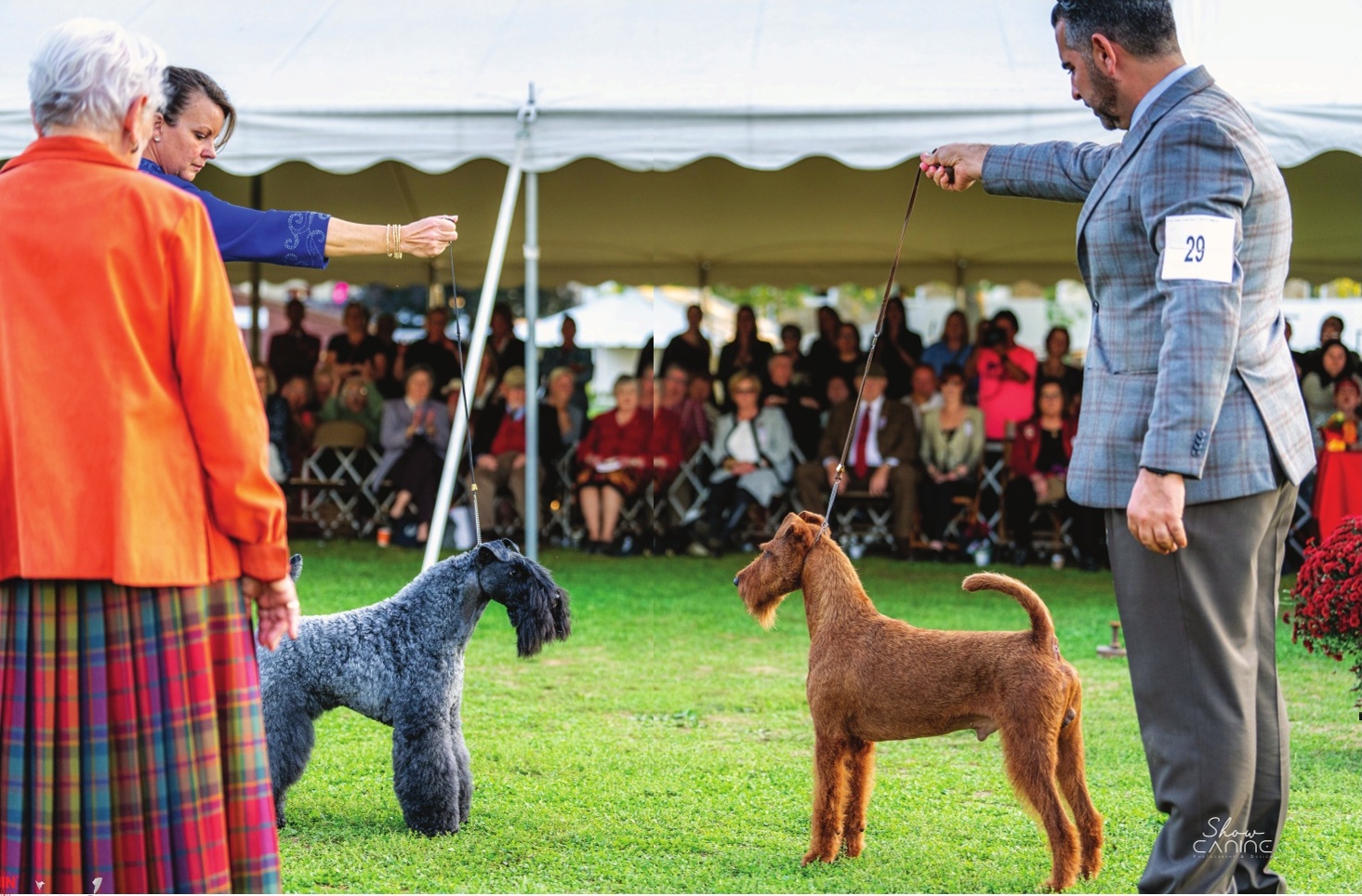
At Montgomery, spectators are always treated to the sight of two tenacious terriers sparring in the big ring.


THE TERRIER BREEDS
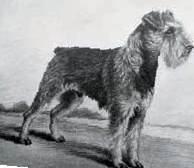
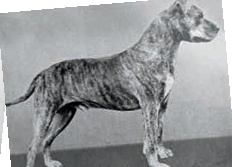
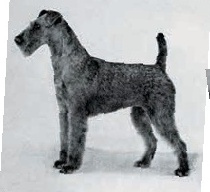
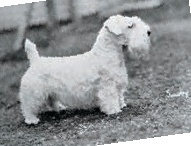
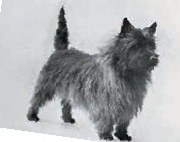
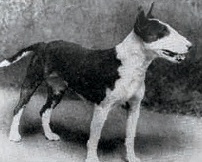
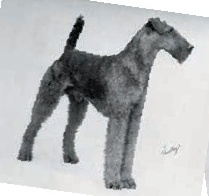
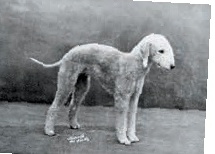
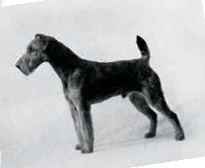
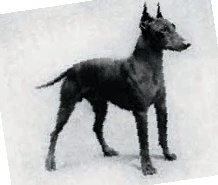
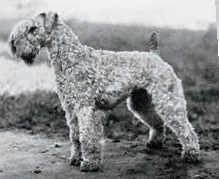
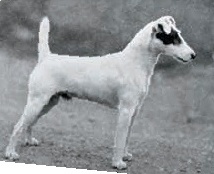
A COLLECTION OF VINTAGE PHOTOS
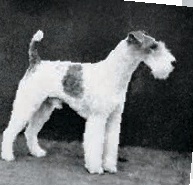
P hotographs are not perfect reproductions of their original subjects. Instead, they are reflections, really, light that has been captured to tell stories that begin, “Once upon a time…” For admirers of purebred dogs, photos can tell particularly insightful tales, especially the images that have had many decades to mature. The stories they tell reflect their breeders’ knowledge and abilities, and they demonstrate how far things have come. Occasionally, they remind us how far we have yet to go.
This collection of photos appeared in The Complete Dog Book (New and Revised Edition), 1941. At 736 pages, this Official Publication of the American Kennel Club introduced each of the breeds then recognized by the registry to a public that was clamoring to welcome a purebred dog into the home—and readers wanted to picture the possibilities. As the book’s preface states: “It was felt that each breed should be represented or pictured by illustration. Sketches of the ideal dog of each breed were suggested. After careful deliberation of the subject, it was decided this would be unwise as it would mean presenting only the artist’s conception of the ideal type, which might very possibly not conform with that of the majority interested in that particular breed.” Dog people, it seems, have always had strong opinions about their breeds.
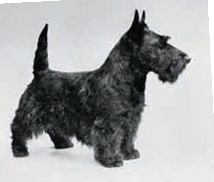
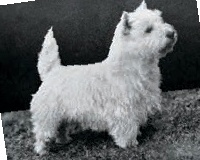
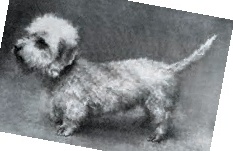
In any event, The New Complete Dog Book has always included both photographs and illustrations in each of its 22 editions. Every image published reflects a breed at a specific time in its history, and each tells part of a breed’s story. The other part is left to the viewer’s interpretation and imagination. So, as you view this sampling of images, we hope you enjoy imagining what these dogs were like and how they might compare with their counterparts in the show ring today.
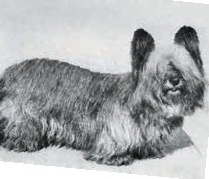
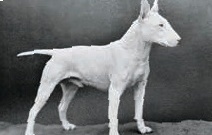
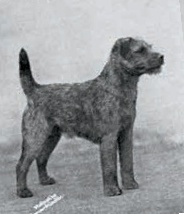
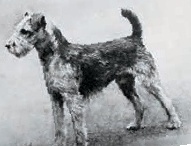
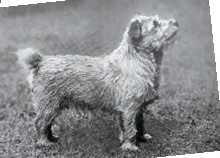


THE MODERN
DOG ENCYCLOPEDIA
SKYE TERRIER
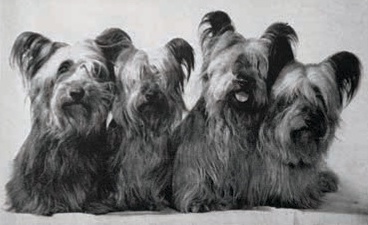
Skye Terriers: Owner, Mrs. R. Percy Adams, Ste. Agathe Des Monts, P. Q., Canada.
The Modern Dog Encyclopedia was published in 1949 by Stackpole and Heck, Inc. for Brown & Bigelow, edited by Henry P. Davis. The section on the Skye Terrier is reprinted here, in part, for the benefit of contemporary breeders, exhibitors, and judges.
“…brought out of barbarous borders fro’ the uttermost countryes northward… which, by reason of the length of heare, makes showe neither of face nor of body.”
So wrote Dr. John Caius describing the Skye Terrier in his historic volume Englishe Dogges, the first book devoted solely to dogs. This quotation from a book, written in the sixteenth century, establishes the antiquity of the Skye as a breed. At that time the Skye was a newcomer to England from his native highlands and, though Dr. Caius’ words “length of heare” could still be applied today, he differed in appearance from the present-day “beauty.”
For beautiful indeed is this Terrier with his smooth cascades of shining groomed coat, the tender softness of eyes obscured by a thick veil of hair… attributes which earned him the name of the “Heavenly breed” as a tribute from admirers.
This purely Scottish breed had its early home in the mist-shrouded island of Skye, but it was also found in other islands of the Hebrides as well as on the mainland of Scotland. It is said that Dr. Johnson, returning from a visit to the Islands with Boswell in 1773, remarked that otters and weasels were plentiful on the island of Skye and that the foxes were numerous and were hunted by small dogs.
The earliest descriptions of the breed present a Terrier much smaller in size than the type of today, a size more adapted to burrowing and taking to water. It had a profuse, hard coat, with short legs, a body long in proportion to its height, and with ears that were neither erect nor drooping, but half erect and raised to alertness when aroused. In the early days, the Highlander cared far less for beauty than for the sporting ability of his dogs, and although it seems difficult to credit the languishing-beauty appearance of the Skye of today with bloodthirsty tendencies, the breed was originally used and developed for hunting among the rough rocks and crevices of his native shores. He needed the face fringe to protect his eyes, his lithe, long body for agility in getting into burrows and dens.
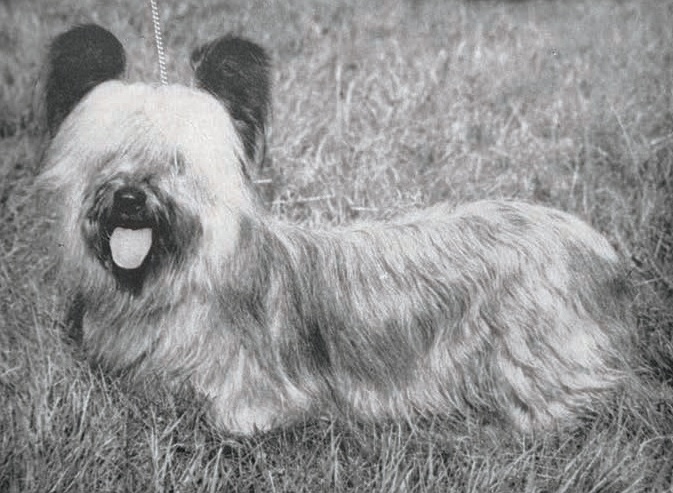
Skye Terrier: Ch. Scottish Chief Of Arreton. Owner, Mrs. M. Stillman, Roseland, NJ.
When the Skye first made his appearance in England, it was taken up by the nobility, than which nothing could do more to make it fashionable. Queen Victoria greatly admired the breed and always owned several Skyes from 1842 on. In 1896, a Skye was presented to the then Princess of Wales, who later became Queen Alexandria. Sir Edwin Landseer’s paintings in which the Skye was introduced helped to draw public attention. It was still considerably smaller in size than today’s type. Mr. Pratt of Paddington, London, had Skyes around 1885, and one dog, Sandy, weighed about 16 pounds, considered an ideal weight at that time.
There is no question about when the Skye was accepted by the Kennel Club, for the breed was included in the first volume of the Kennel Club Stud Book. A bitter dispute started in 1874 and continued for five years concerning the distinctions of the Scottish breeds of Terriers. Finally, the Kennel Club was approached to settle the controversy. It centered upon those which were claimed to be pure Skyes, a dog described as Scotch, and a third which was called Aberdeen. The differences were plain, but an issue was made over which had the right to be Scottish!
The Skye has been surpassed in popularity by many of the more modern breeds of Terriers, but it is unrivaled in length of time of popularity because it has existed over a period of long duration. Before the turn of the [twentieth] century, it was an important breed in American dog shows. It retains the greatest popularity in Scotland and England.
Two varieties of Skye Terrier are recognized, the prick-eared, and the drop-eared (pendant). In other respects both are identically the same in all points.


THE PRO SHOP
THE PLACE FOR PRO HANDLERS
JOSEPH WASHNESKY
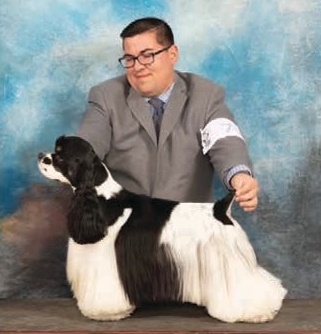
1. Please tell us a little bit about yourself. Where do you live? How long have you been a Professional Handler? How did you get your start? Who are/were your mentors and with whom did y ou apprentice?
Hi, my name is Joseph Washnesky. I currently reside in Houston, Texas. I have been out on my own for three years now. I have assisted professional handlers in my career and have worked with some great handlers, such as Mr. Wood Wornall, Carlos Carrizo, Bruce and Tara Schultz, David and Jennifer Harper, and last but not least, Mike and Linda Pitts. These handlers taught me a lot about conditioning dogs and 101 on taking care of dogs. In my career, I have won five BIS on (American) Cocker Spaniels, which I love to show.
2. As a Professional Handler, can you share your thoughts on the sport today? Has judging changed since you first began showing dogs professionally? What do you think about the number of shows today? Is social media good for the sport? Is it harmful?
I started showing 20 years ago, and judging has changed some just like in any other sport. I do enjoy this sport and showing to some great judges every weekend. I enjoy showing to Harold (Red) Tatro and Mr. Dana Cline, and many more. Social media is good and bad for this sport. It’s very easy to read how someone says something on a social forum and take it differently.
3. Have the changes made to the Rules Applying to Dog Shows been good for the sport of dogs? Any thoughts on Reserve Best in Show? What about earning points through a Group win or placement? Do you agree that Reserve Winners at a Specialty should earn championship points?
I think by going Reserve Best in Show, the dog should receive all-breed points, as they defeated the same dogs as BIS did. I think AKC was smart to award majors for a class dog to win the Group or even place in the Group. I think it’s a great idea for Reserve Winners to get a major at a Specialty, as it’s hard these days to find majors in most breeds .
4. In your opinion, what are the biggest challenges facing the dog show community as a whole today and how can these be addressed? What are some of the positive changes you've seen in your profession and in the dog show community over the past decade?
I think seeing some new judges lately is good for the sport and it gives a different eye and perspective on new dogs being shown. Seeing handlers become judges now is amazing because they have worked hard breeding and showing and campaigning dogs in their career, and I enjoy showing to them—either I win or lose. At the end of the day, it’s just a dog show and people need to hear that more often.
5. And finally, do you want to tell us anything else about yourself or do you have any messages for the rest of the fancy?
As for hobbies other than showing, I really don’t get out and do much because while at home I’m taking care of dogs and conditioning them for the next show. Something I want to say is for the Juniors who are coming out and starting to be a professional handlers: Please take the time to work for a few handlers and get some real knowledge of how to run a business and how to properly take care of the animals and be able to see signs of what’s going on with the dogs. It’s not all about winning. It’s about being the best and taking care of client dogs at the end of the day.
‘FIELD’ VERSUS
‘SHOW’ DOGS
FOR GRIFFONS, IT’S
ONE AND THE SAME!
W hile some Sporting Dog breeds and breed clubs have struggled with the split of their breed into the “field” versus “show” lines, the American Wirehaired Pointing Griffon Association (AWPGA) and its members have worked hard to keep their breed true to the following two breed club mission statements:
• Object of club shall be to encourage and promote the quality breeding of Purebred Wirehaired Pointing Griffons—and to do all possible to bring their natural hunting qualities to perfection.
• To urge members & breeders to accept the standard of the breed as approved by the AKC as the only standard of excellence by which the Wirehaired Pointing Griffon shall be judged.
The AWPGA has embraced the description of the Griffon as a “Versatile Hunting Dog.” Not only a field dog that hunts game, he is also effective in Hunt Tests, Tracking, Obedience, Show, and Agility. In the United States, largely due to the efforts of the AWPGA, many Wirehaired Pointing Griffons have demonstrated their competitive merit by earning Obedience, Agility, Field, Hunt, and Show titles, including NAVHDA (North American Versatile Hunting Dog Association) Versatile Champion, National Shoot to Retrieve Association Champion, AKC Master Hunter, and AKC Best in Show.
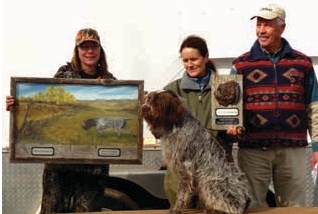
AM/CAN CH Duchasseur Bayou CGN FD AGNS UT I
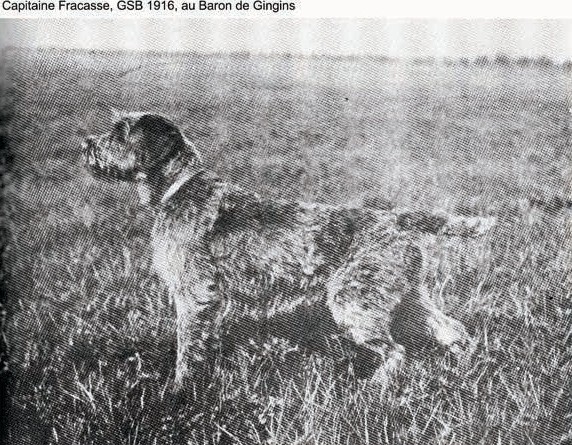
The AWPGA celebrates the achievements of their members’ Griffons in all venues in their quarterly magazine, The Griffonnier. The AWPGA also holds an awards banquet each year in conjunction with their National Specialty. Awards & Recognition are given to club members from around the U.S. and Canada for their achievements in the show ring, the field, and in Obedience and Agility. One such award, The Capitaine Fracasse Challenge Trophy, is awarded to a Wirehaired Pointing Griffon that is an AKC Bench Champion of Record and earning the greatest number of points in AKC, NAVHDA, and/or NSTRA Field Performance Tests or Trials in a given calendar year. This particular award celebrates the dual role of AKC Bench Champion and outstanding Field Performance.
In 2012, the inaugural Korthals Cup event was held in conjunction with the club’s National Specialty. Entry requirements were limited to Griffons that had top field titles such as AKC Master Hunter, CKC Field Dog Excellent, NAVHDA Versatile Champions, and Utility I & II Prized dogs. This competitive event encompassed both field and water work. The event drew in some of the best field-tested dogs in the country, many of them also competing in the Specialty as well. Of the 13 entries, eight of them were AKC and/or CKC Bench Champions and one was an AKC Grand Champion. The 2012 National Specialty saw the top-winning show dogs all carrying hunting titles, which included AKC Junior, Senior, and Master Hunters along with multiple NAVHDA Prized dogs taking the highest honors of Best of Breed, Best of Opposite Sex, Select Dog/Bitch, and Awards of Merit. When you combine the Korthals Cup with the results of the National Specialty itself, one can see that the Wirehaired Pointing Griffon is truly a breed that keeps its original purpose at the forefront, with dedicated owners willing to compete with their dogs in all venues.
There are many excellent examples of how club members have worked with dedication to promote top-winning dogs in the field, in the ring, and in our breeding programs. Our top-producing sire of AKC Champions in 2008, 2010 & 2011 was AM/CAN CH Duchasseur Bayou CGN FD AGNS UT I. “Bayou” has produced many AKC and CKC Bench Champions, including many top-ranked show dogs. He has also produced more than 56 NAVHDA Natural Ability Prized pups, two Utility Prep Prized dogs, and 12 Utility Prized dogs, including five with Prize I’s. He has produced seven litters of puppies that have earned a NAVHDA Breeder’s Award for Natural Ability. Bayou, himself, is a CKC multiple Group placing, RBIS winner, 2006 AOM winner at Eukanuba National Championship, and 2005 Winners Dog and 2006 AOM winner at our AWPGA National Specialty. In 2009, he was awarded Best Stud Dog at the National Specialty. In 2011, Bayou was the No. 1 Field Trial Griffon in Canada, No. 7 in the Top Ten Pointing Dogs in Canada, and the AQGAPD Poule Korthals winner.
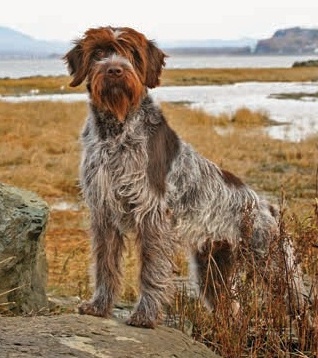
VC AM/CAN CH Duchasseur Crownpoint JHR CD NA I UT I
The 2012, AWPGA Korthals Cup winner and joint winner of the 2012 Capitaine Fracasse Challenge Trophy was VC AM/CAN CH Duchasseur Crownpoint JHR CD NA I UT I. In 2011, “Cru” finished No. 8 in the Top Ten Pointing Dogs in the CKC and placed in several Field Trials in Canada. She has earned multiple placements in Obedience Trials in the U.S. and Canada. Cru also competes in the show ring; always owner-handled, and is a multiple Best of Breed winner. She took a CKC Best Puppy in Sporting Group, and in 2011, Cru earned Best of Opposite Sex at the AWPGA National Specialty.
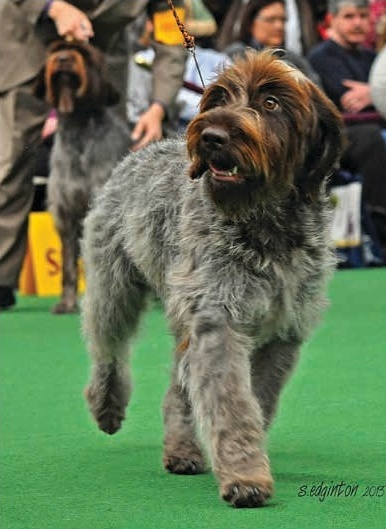
GCH Flatbrook’s Heir About Him MH NA III & GCH Stonehenge Willo’The Wisp JH CA NAII
This past year, all five of the Wirehaired Pointing Griffons earning Westminster invitations had hunting titles; the only Sporting Dog breed to make that claim. Our top five show dogs (Breed points) in the U.S. for 2012 included three Junior Hunters, a Senior Hunter/NAVHDA Utility II Prize dog, and a Master Hunter. The Best of Breed winner for 2013 Westminster Kennel Club and 2012 Eukanuba National Championship was GCH Flatbrook’s Heir About Him MH NA III, who also earned an AWPGA Field Dog Title in 2012 for completion of the AKC Senior and Master Hunter titles in 2011. Receiving other top honors as Best of Breed at the 2012 National Specialty and Best of Opposite Sex at 2013 Westminster Kennel Club was GCH Stonehenge Willo’ The Wisp JH CA NA II; another multi-field-titled/top-winning show bitch. These Griffons are following a long tradition of field-titled Griffons in the show ring competing at the highest levels. Since 1992, two AKC Master Hunters, three AKC Senior Hunters, and eight AKC Junior Hunters have won Best of Breed honors at the Westminster Kennel Club shows.
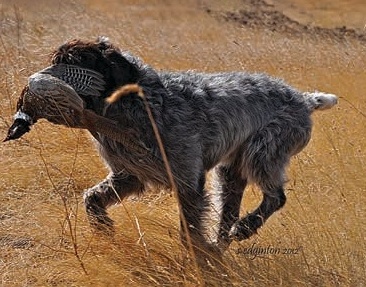
Wirehaired Pointing Griffons like these, that are able to succeed in multiple venues at the highest levels, are more common than rare. The AWPGA will continue to encourage its members to promote their dogs in all venues. In doing so, we hope that in the future the Griffon will continue to be true to both the original purpose and physical attributes as outlined in our Breed Standard: medium-sized; with a noble, square-shaped head; strong of limb; bred to cover all terrain encountered by the walking hunter; movement showing an easy cat-like gracefulness; excels equally as a pointer in the field or a retriever in the water; coat is hard and coarse, never curly or woolly, with a thick undercoat of fine hair, giving an unkempt appearance. His easy trainability, devotion to family, and friendly temperament endear him to all. The nickname of “supreme gundog” is well-earned.
I hope you have enjoyed learning more about our wonderful, versatile dogs and the work we do to celebrate and promote our breed.


GENETIC TESTING
CAN OFFER BREEDERS CLARITY
I t was back in 1998 when I first started attending dog shows and talking to exhibitors about genetic testing. There were conversations about how some tested for von Willebrand’s and how very progressive breeds, such as the Labrador Retriever, would collect blood samples and be part of what we called “20/20 Clinics”—collect and batch twenty samples in one day and everyone gets a 20 percent discount! Ah, those were the days when everyone worked together to get a discount. What has changed for me the most over these 20 years is that I have built some great relationships and friendships with breeders, so much so that they gave me the nickname Genetic George. Because of these great relationships and conversations, I started the “Genetic George Explains It All” Facebook page. I do not in any way confess to being an expert, but I do think I have a really nice way of giving breeders an answer that reflects my understanding of the challenges all breeders face from having to breed responsibly, but more importantly, making sure they breed for sound temperament, not just health. I have a wonderful way of putting it all together and keeping the math simple.
Throughout my career, I have been asked many questions by breeders about genetic testing. In this article, I hope to address some of the more common questions and provide some clarity on the issues that breeders face.
HOW DO I BREED RESPONSIBLY WHEN A GENETIC TEST IS NOT AVAILABLE?
I get a number of inquiries about cherry eye and cleft palate, and to date, there is no genetic test for these conditions. Is it hereditary? Is it genetic? In such cases, I like to apply the “first-time mating” rule. If the cleft palate you see is part of a first-time mating (sire and dam) and you notice several offspring in this litter with the defect, then my rule of genetic thumb tells me that this is most likely hereditary. Remember, we cannot currently determine the genetics and mode (no genetic test), but we can say that based on the pedigree and mating, it is hereditary. Genetic George would advise to avoid this mating, and if you do use the sire and dam, then you should breed to another dam or sire that is unrelated by pedigree.
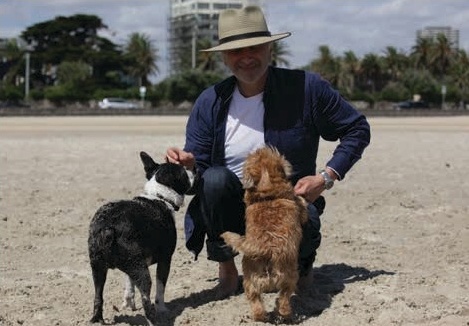
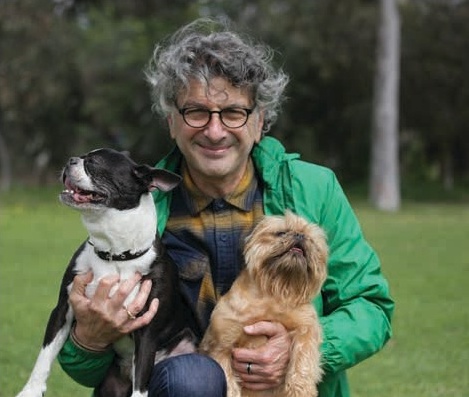
George pictured with Charlie The Boston (His CFO) and Mary the Griffon (His CMO)
HOW CAN MY DOG HAVE A DISEASE THAT IS NOT LISTED ON THE OFA SITE?
Another great question that often needs clarification. A genetic test is almost always published as having an association with a breed, i.e., it has been scientifically validated for a specific breed. This tends to create some confusion, as a disease may be seen across a great deal of breeds but the genetic test is not relevant to most of those breeds. A perfect example is cataracts. The genetic test is only of relevance to the French Bulldog, Staffordshire Bull Terrier, Boston Terrier, Australian Shepherd, and any mixes or varieties of these types. But here is where the confusion comes in, a breed of dog other than those listed above, can be affected by cataracts but will test negative for the disease because the test is not genetically relevant.
WHAT HAPPENS IF I GET A DOG TESTED AND IT COMES BACK AS POSITIVE OR A CARRIER FOR A DISEASE THAT WASN’T PREVIOUSLY AVAILABLE FOR TESTING?
Over the last 20 years, the technology and genetic offerings have changed dramatically! The number of genetic tests has grown exponentially from the first and only genetic test available in 1989*, which was for Hemophilia in the Cairn Terrier, to approximately 130 genetic diseases in 2003, to now over 344 genetic diseases (as listed on the OMIA site as of March 2024).
Unfortunately what you have bred cannot be changed or corrected, the pups have gone. It’s about what you can and need to do for the next litter. Just be sure to take the initiative to research the disease before breeding, as they can be complex, i.e., dominant or recessive mode. Dominant (inherit one copy of the gene from a parent) means that the offspring will have a 50 percent chance of being affected by the disease. Recessive requires two copies of the gene (inherit one copy of the gene from each parent) to present.
WHAT LIES AHEAD?
Looking ahead, the genetic testing landscape continues to shift, with technological advancements leading to more comprehensive testing panels. However, the industry is also consolidating, with fewer laboratories operating. This change prompts discussions about the efficacy and necessity of expansive testing panels versus targeted, breed-specific tests. The huge commercial interest in phenotypic tests, from colors to furnishings, has been a real revelation in my time. When I first started, no one would pay $60 for any test to see whether their dog was EE or Ee. Today, it remains the first question they want to know. As Genetic George, I’m eager to engage with breeders regarding their experiences and perspectives about genetic testing. What do you feel is a pain point you have with genetic testing? What advancements or resources would you find helpful? What would you like to see in the future? Your insights on breed-specific data, disease prevalence, and the growing interest in phenotypic tests, from coat colors to physical traits, are invaluable.
I am enthusiastic and keen to hear what you, the breeders, think. As we navigate this genetic journey, your feedback is crucial. Whether you’re a member of the “Uber generation,” with modern priorities, or someone who, like me, still prefers hailing a cab, I’m here to listen and learn. Let’s discuss how genetic testing can continue to benefit our beloved breeds. Please share your thoughts and feedback with me at: george@orivet.com.
Together, let’s shape a future where every purebred dog not only looks the part but lives a long, healthy, and happy life, true to its breed and beyond.
* Single base pair substitution of Factor IX (clotting) gene causing Hemophilia B in the Cairn Terrier. Disease: Hemophilia B - Coagulation Factor IX Deficiency - Mutation: c.1253G>A
ABOUT THE AUTHOR
George Sofrondis is the Co-Founder of Orivet Genetic Pet Care, a leading genetic testing organization based in Australia. “Genetic George,” the Petentrepreneur, who has recently taken over the role as CEO in North America, focuses on creating innovations for breeders, veterinarians, and pet owners—all while enthusiastically educating on all the benefits of DNA testing, particularly the insight it brings to all animal enthusiasts.


BEYOND THE ALPS
THE VERSATILE JOURNEY
OF THE ENTLEBUCHER
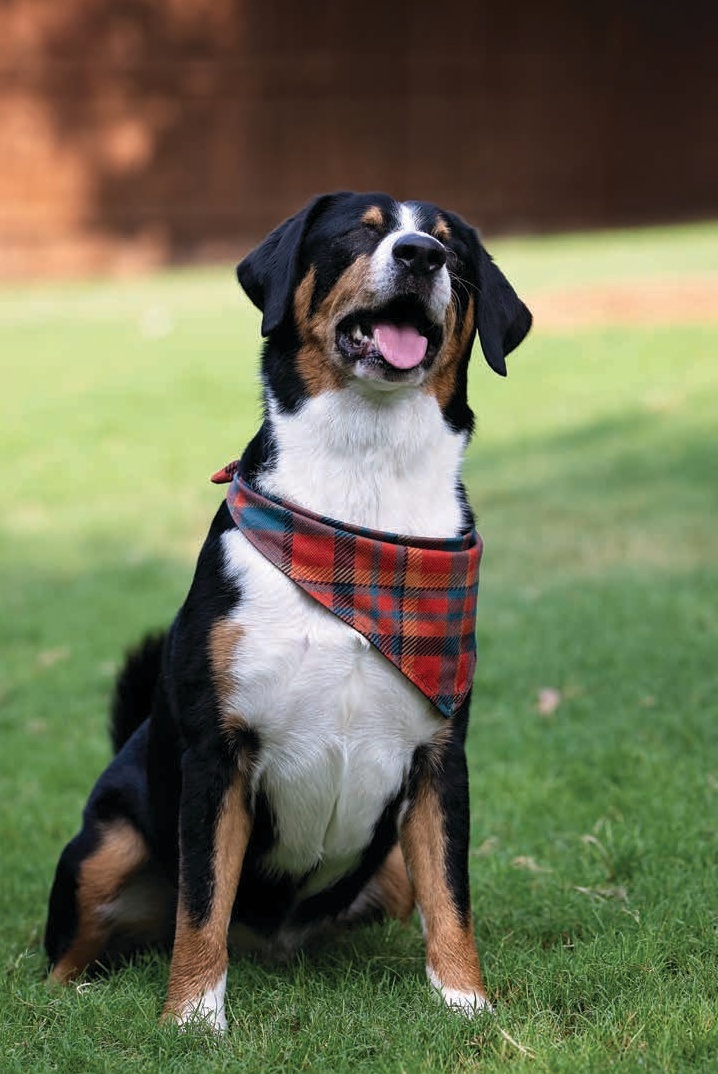
T he Entlebucher Mountain Dog is a breed of many talents. Nicknamed the “laughing dog” for its expressive personality, this spirited companion shines in countless roles—Therapy Dog, Scent-Tracking partner, Dock Diver, Agility competitor, and even navigating blindness. What truly captures hearts, though, is their boundless energy and joyful spirit.
The breed’s history is not extensively documented. Their name comes from the Entlebuch Valley in Switzerland, where they were first discovered. Swiss cattlemen bred these sturdy little dogs to drive and guard livestock, relying on their determination and agility to keep herds moving and safe on alpine pastures.
The Entlebucher’s modern recognition began in 1913, when four bobtailed dogs were shown in Langenthal, Switzerland, introduced by Professor Albert Heim. Just over a decade later, in 1927, their first official Breed Standard was written, securing the Entlebucher’s place among Switzerland’s treasured mountain dogs.
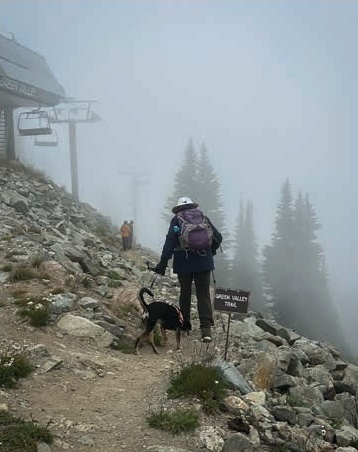
Entlebuchers arrived in North America in the 1970s, gradually winning the admiration of dog enthusiasts. Among the early pioneers was Jan Vincent, who recalls the very first gathering of Entlebucher owners in St. Helens, Oregon, in 1998. That milestone meeting not only brought owners together to share their passion and vision for the breed, but also laid the foundation for the National Entlebucher Mountain Dog Association (NEMDA).
What makes this breed so endearing to owners’ hearts? Here are three stories that will melt your heart and amaze you.
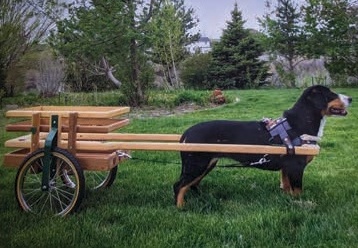
Jan Vincent shared one of her most treasured Entlebucher memories, an experience that captures why this breed is truly incomparable. Her beloved Tessie excelled in many arenas. She shone in the show ring, winning a National Specialty in 2008, competed eagerly in canine sports, and even earned an ACE (AKC Humane Fund Awards for Canine Excellence) Award. Yet, Tessie’s greatest gift was her work in Animal Assisted Therapy.
“In 2012, Tessie and I had the privilege of serving Veterans in the Wounded Warrior Program. One morning, I received a call from the mother of a young Marine. He had returned home missing his left leg, blind in one eye, and bearing severe burns on his face, arm, and chest. Though surrounded by family, he had shut himself off from the world—refusing visitors, isolating in a darkened room, and telling his mother, ‘Why couldn’t I have just died?’ She asked if Tessie and I could come.
“Unsure if we could help, I agreed. When we arrived, I sent Tessie into his room alone. A while later, his mother peeked in to find Tessie curled up in his arms—both of them sound asleep. Tessie began visiting Danny up to three times a week. I finally met him during the third week of Tessie’s visits.
“Three weeks later, when I returned, the change was remarkable. The Marine—Danny—was waiting outside on the porch. With pride, Tessie made introductions. His mother radiated joy as Danny explained, ‘Tess licked every inch of me that was hurt, then laid in my arms. She licked away my tears as I unloaded everything, and then she asked me to play. She doesn’t care how ugly or messed up I am—she treats me like I’m her best friend.’”
Next are two remarkable Entlebuchers who both lost their sight to glaucoma.
First is handsome Finn. At just four years old, glaucoma stole both of his beautiful eyes. The disease struck fast and without mercy, leaving his owners, Lilla and Chris Caho, heartbroken. Yet Finn refused to let darkness define him. He still greets the world with a smile, chases tennis balls with joy, and happily joins his family on camping adventures.
Then there’s Luna, a sweet little Entle who lost her beautiful eyes at once in 2021 due to glaucoma, right before she turned four. Her mom, Gail Rein, began Scent Work with her after the diagnosis, helping Luna lean into her other senses. What amazes both Gail and me most, though, is her love of hiking. Luna takes to the trails with fearless confidence—like she was born to lead the way.
Despite their hardships, Finn and Luna continue to inspire with their resilience, adaptability, and zest for life, reminders of the unshakable spirit of the Entlebucher.
Now, let me introduce Bodhi—a powerhouse of an Entlebucher. This girl is strong; she nearly pulled me to the ground more than once during our time in Washington last year!
As of August 2025, Bodhi holds the crown as the most decorated Entlebucher Mountain Dog in history. With over 50 awards and 34 official CKC (Canadian Kennel Club) titles, she has set a remarkable standard of achievement. Her brief résumé of accomplishments is nothing short of extraordinary:
• Rally Obedience: Rally Grand Champion and RMX2 (Rally Master Excellent 2—earned by completing 20 qualifying Master/Excellent pairs in the same trial)
• Competition Obedience: Utility Dog and Obedience Trail Champion
• Scent Detection: Masters, Containers, Interior, and Exterior titles
• Trick Dog: Grand Champion
• Canine Good Neighbour: CKC’s equivalent to the AKC (American Kennel Club) Canine Good Citizen
• Versatility Titles: CKC Versatility Gold, plus NEMDA Beginner, Versatility, and Versatility Excellent
• Sporting Detection Dogs Association (SDDA):
SD-Champion Excellent Special Title (equivalent to NACSW [National Association of Canine Scent Work] in the US)
Bodhi isn’t just strong, she is a living testament to the versatility, intelligence, and drive of the Entlebucher breed.
By sharing these stories, we hope you can see the remarkable journey of the Entlebucher Mountain Dog, the smallest of the four Swiss Mountain Dog breeds. Once bred to herd dairy cows in the Swiss Alps, they have come a long way from their working origins. Today’s Entlebuchers are versatile, devoted family companions. But like many breeds, they face certain health challenges, including a higher risk of conditions such as glaucoma.
Breed-specific health issues are uncommon, and over the years Entlebuchers have contributed to important scientific studies aimed at protecting their future. Progressive Retinal Atrophy (PRA) was once a significant concern for this breed, until research at Cornell University, led by Dr. Greg Acklund, pinpointed the gene responsible. Since 2002, breeders have been able to use a DNA test to manage and reduce PRA in Entlebuchers. The breed has also participated in studies on ectopic ureters with Michigan State University and the University of Zurich, and is currently involved in research led by Dr. Gillian McLellan at the University of Wisconsin to investigate a possible genetic link to glaucoma.
While glaucoma is not considered a breed-specific disease, it has touched Rough Collies, most notably Reveille, the beloved mascot of Texas A&M University. Experiences like this highlight why remaining on the forefront of health research is vital—not only to safeguard Entlebuchers, but also to advance knowledge that can help other breeds. Ensuring their health and longevity is part of honoring their legacy and securing their future.
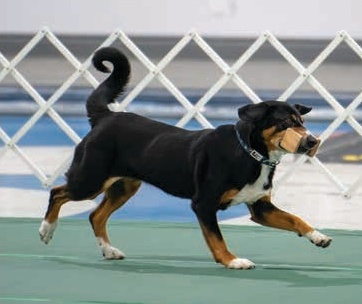
GLAUCOMA WARNING SIGNS
Glaucoma can strike extremely quickly in dogs. Watch for these warning signs:
• Redness of the white of the eye
• Color change to the eye
• A dilated pupil that doesn’t respond to light
• A cloudy eye
• Intermittent blindness
• Squinting
• Discharge from the eye
• Sudden changes in activity or interest level
Contact your veterinarian immediately if you recognize any signs of glaucoma in your dog. If you own a higher-risk breed, consider researching a board-certified veterinary ophthalmologist through the American College of Veterinary Ophthalmologists at: www.acvo.org.
ABOUT THE AUTHOR
Christena Stephens is a native Texan, residing on the Llano Estacado, enjoying sunsets and chance porcupine encounters. She is an ardent advocate of wildlife conservation, and her heart belongs to her dogs, and all other dogs! Christena is an author, historian, photographer, nonprofit advisor, and wildlife biologist, and has served as President of the National Entlebucher Mountain Dog Association (NEMDA) since 2021.


THE GREATER SWISS
MOUNTAIN DOG
JUDGING COLOR
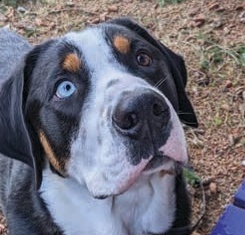
G reater Swiss Mountain Dogs sport the striking black tri-color pattern they share with their fellow Sennenhund breeds, the Bernese Mountain Dog, the Entlebucher Mountain Dog, and the Appenzeller Mountain Dog. Where they differ from their cousins is with more tolerance for variation in white markings, being either darker or brighter.
The base coat, as per the Breed Standard, is always black with tan points; white feet, chest, tip of tail, muzzle, and blaze—and in Swissys, white is allowed on the back of the neck. White neck markings can be anything from none at all to a full, wide collar. While symmetry of white markings is preferred, it is not required.
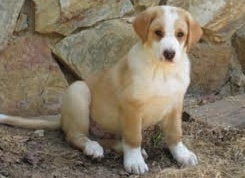
There is tremendous tolerance for marking variations in the breed, as the focus should always be on structure, breed type, and the ability to do the job they were bred for. The black coat may include agouti, which is a tan band of color on the black hair shaft. As per the Greater Swiss Mountain Dog Club of America Judge’s Education program, banding in the coat is not to be faulted. This banding may be seen all over, but is commonly seen on the sides of the neck. Undercoat must be present and may vary in color from dark gray to tawny, with darker gray preferred. Undercoat is most often easily seen on the neck of the dog, but total lack of undercoat should be severely penalized. In all honesty, in 25 years looking at a lot of Swissys, I have never seen one with a total lack of undercoat. Even the shortest-coated Swissys will have undercoat.
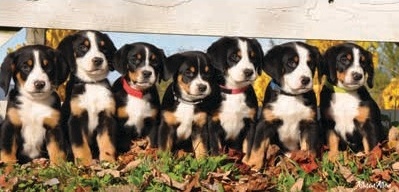
The only disqualifications in Greater Swiss Mountain Dogs are all color-related. From the AKC Standard: “Any color other than the ‘Black, Red and White’ tri-colored dog described above, such as ‘Blue/Charcoal, Red and White’ or ‘Red and White.’ Blue eye or eyes.” Blue coat is a result of the dilution gene, diluting all of the black coat and pigment to gray. Red coat is the result of the ee gene, removing all black pigment from the coat.
When it comes to judging, we strongly encourage judging the dog upon type, structure, and soundness as opposed to how pretty its markings turned out. The best dog in the ring may be the brightest or the darkest—or maybe it really is the one who’s “paint” is perfect.
ABOUT THE AUTHOR
Anna Wallace has owned and competed with Greater Swiss Mountain Dogs for over 25 years. She started her love affair with Swissys in 1996 with a dog named ‘Connor’ (CH Corner Creeks Concerto CD) who won top honors for several years in the show ring and cemented Anna’s thorough addiction to the sport of Conformation. Anna operates under the kennel prefix ‘Liberty Run’ and has gone on to finish over 70 AKC Conformation titles on Greater Swiss Mountain Dogs—and shows no signs of stopping.


UNDERSTANDING HOW
DOGS TALK
H ow is it that dogs understand human language, whether it is clipped Yankee, Texas Drawl or Southern Y’all, but we humans have so much trouble understanding them?
It matters not which country we’re from, humans are of the same species so we should be able to understand each other, right? Wrong. We don’t all speak the same language nor do we “read” each other’s actions as well as we did before we became so civilized.
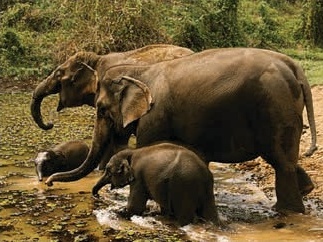
Rhinos, hippos, and elephants have no trouble understanding each other. In fact, world-renowned elephant authority, University of Georgia Theriogenology Professor Richard Fayer-Hoskins DVM, reports that elephants actually carry on extensive verbal conversations.
Did you ever think about the fact that dogs have no problem understanding each other whereas Midwesterners can get lost trying to get directions from someone who speaks in Brooklynese? It isn’t just body language that animals read. THINK about going to the kitchen early to fix his food and your dog will beat you there, tail wagging.

And what about dogs that live in Alabama but instantly understand what someone from New Hampshire is saying? We went to dog shows all over the country, but taking a taxi from “The Garden” (Westminster) in New York City was a kerfuffle of a conversation for us Southerners. New York City cabbies are remarkable in their command of foreign languages, but they had a little trouble with finding us “sumpun ta eat” that was “not too fur a piece.”
Imagine going to China and instantly speaking their language! Your little Italian Greyhound meets and greets a Pekinese like an old friend. Okay, you are thinking, “no big deal” that canine conversation is body language, but even that is remarkable because a Rottweiler and a Poodle have very different body carriage and signals.
Even more amazing than the canine’s ability to converse in any language is their ability to read humans like a book! Any dog can sense someone’s intentions, but “guard breeds” are particularly adept at understanding human body language. Think about it. Protection Breeds are as tuned in to humans as flock guardians are to their sheep.
If your dog is normally friendly but takes exception to someone, don’t let your guard down.
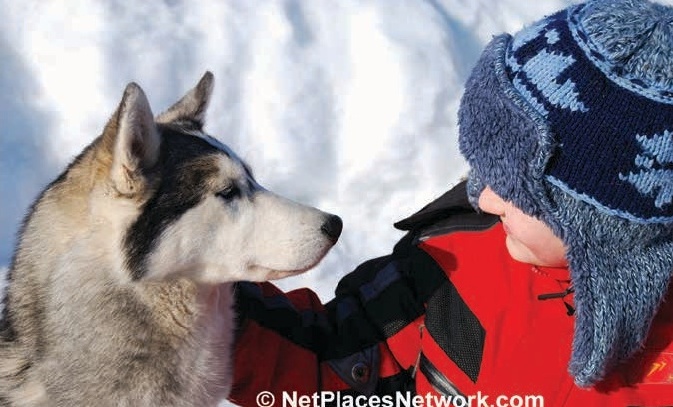
And here’s something even more thought-provoking. You know dogs read body language… but read your mind?!!! Think about this everyday phenomenon which we humans take for granted. You are watching TV, your dog dozing by your chair. During the commercial, you THINK about a snack. Even as you start to get up, your dog jumps up and heads for the kitchen!
Wouldn’t the world be a better place if we understood each other as well as dogs understand us? Here’s a fact to ponder. Put all the college professors in the world together and they still don’t have the perceptiveness of a wild rabbit!
Is it that we depend too much on the spoken word and have therefore diminished what our senses might tell us about a situation or a person’s character? Have humans lost that instinct or is it just suppressed in today’s overcrowded world? Maybe we should step back and take a lesson from our dogs. Any owner who is communicating with their dog out of love can learn from him or her—and I know that’s you because you are reading this.
Consciously try it for a few days. “Listen” to your dog AND to your own buried instincts.
Your dog can still “sense” if a person intends to harm you, whether physically or emotionally. So, work on reading him and honing your own instincts based on what your dog displays. We are so evolved that we often let manners rule over our innate perception. It is a fact that the more “elevated” and educated person is the easiest target for a clever conman.

Your lap dog can sense an evil person as easily as a New York City detective can read that same person. That being said with deep respect for all the men and women who risk their lives in law enforcement. Their senses are especially fine-tuned to danger, and like a working police dog, they are uncannily perceptive.
So, when your dog talks to you, whether verbally or through body language… listen up. Your best friend usually has something interesting to say. Be especially cognizant of his or her posture as it relates to “did you hear that?” If your dog is relaxed and wagging, he knows what he heard or smelled. If he is tense and still, he senses something unusual. If he growls, your dog has decided it could be a threat and you should be on high alert.
Understanding your dog could save your life. He may lie about who tipped over the kitchen garbage, but there is no deceit in a dog when it comes to danger! Understanding your dog can keep you safer or give you a laugh when you most need it.


THE ESSENCE OF THE
SAMOYED BREED
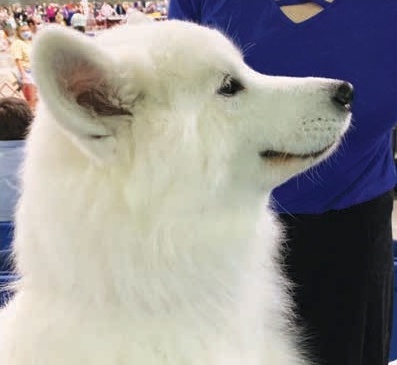
T he year 2020 was known as the Year of the COVID lockdown. When AKC sent a request to the SCA asking for its participation in the AKC Working Breed Seminars being offered at the AKC/Royal Canin Show in December, our Judges Education Committee (JEC) was ready to take on the challenge! The topic assigned to our Committee was to define the Essence of the Samoyed Breed. I decided to toss the topic out to the SCA Judges Education Committee for discussion, and the entire committee quickly dove into a lively conversation on the topic!
“Essence” is a polysemic term used as a designation for the property or set of properties that make an entity or substance what it fundamentally is, and which it has by necessity and without which it loses its identity. So then, what makes up the Essence of the Samoyed Breed?
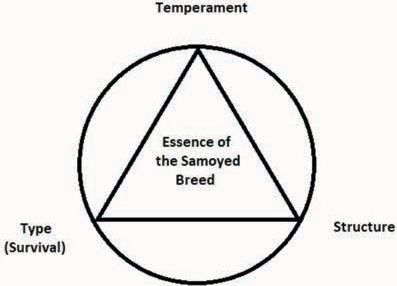
Our first most obvious element was the Breed Type, or the physical characteristics of the breed. The Samoyed is an Arctic breed that lived and thrived around the Arctic Circle where temperatures could plunge to -50 degrees during the long winter months. So the Samoyed had to be equipped to not only survive in these frigid temperatures, but to also work in these extreme conditions as well. Everything about the Breed Type for the Samoyed is designed for its survival and comfort within the Arctic Circle, where it lived for thousands of years before being discovered by outside explorers. Let’s examine a few of the key features that are an integral part of the Samoyed’s extreme weather gear, or Breed Type.
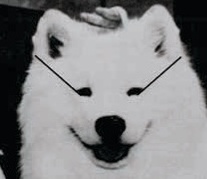
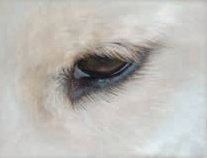
Eyes: Should be dark for preference; should be placed well apart and deep-set; almond shaped with lower lid slanting toward an imaginary point approximately the base of the ears. Dark eye rims for preference. Round or protruding eyes penalized.
The Head: First and foremost, let me state that the Samoyed is not considered a “Head Breed.” However, the head contains many of the characteristics that enabled this breed to successfully survive and thrive in the extreme weather conditions of the Russian Arctic region, and these characteristics should be preserved, as they are part of the Essence of this Breed.
The ears should be thick, well-furred and mobile, which protects the ears from freezing on the tundra. The ears should be in proportion to the size of the head and the dog. If you think the ears look too long or too short, fold the tip of the ear towards the outside corner of the eye... the tip of the ear should end close to this point, if it is the correct size. Ears should be set well apart, but positioned within the border of the outer edge of the head, and be slightly rounded at the tips. Think about the exposed vascular areas of the body where a human might get frostbite; the ears, the fingertips, and the nose. Mother Nature, in all her wisdom, rounded the tips of the Samoyed’s ears and made them heavily furred and mobile to protect them from frostbite or freezing.
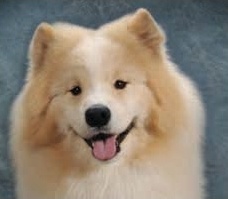
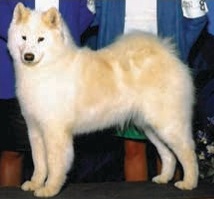
White Coat
Biscuit Coat
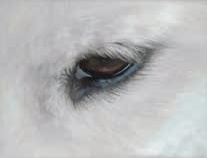
The head should form a wedge... the width of the wedge can vary, depending on breeder preference, and the stop should not be too abrupt, which enhances the aerodynamics of the dog when moving and also enhances the wedge shape of the head. The skull should be broad, but not round, and form an equilateral triangle between the inner base of the ears and the central point of the stop. Eyes should be dark for preference, placed well apart, and almond-shaped, with the lower lid slanting towards the outer corner of the ear. This is a survival characteristic of the breed, and it is interesting to note that most creatures living on the tundra, both human and animal, have this almond-shaped eye. Evolution has created this eye shape, as a round eye has been shown to cause snow blindness from the many months of exposure to the sun’s glare on the Arctic snow. Please note that blue eyes are a disqualifying fault in this breed!
The muzzle must be of medium length, neither course nor snipy, and must have sufficent underjaw to give depth to the muzzle. This is a survival characteristic, as the muzzle must be of sufficient length and depth to warm the frigid Arctic air before it reaches the lungs. The nose should be black for preference, but a brown, liver or Dudley nose is not to be penalized. The teeth should snugly overlap in a scissors bite.
The lips should be black for preference and should curve up at the corners in a “Sammy smile,” even when the mouth is closed. Expression should consist in a “lighting up of the face” when alert or intent on anything. Ears should be erect and alert, eyes should sparkle, and the mouth should form the “Sammy smile!” There should not be droopy flews at the corners of the mouth, as this would cause saliva to accumulate and freeze around the mouth on the Samoyed, causing discomfort to the dog while it is working. So, there is an important reason as to why the Samoyed evolved with a smile on its face… the upturned lipline served a functional purpose in the frigid Arctic region!
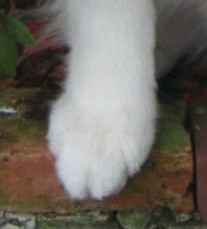
Feet: Large, long, flattish – a hare-foot, slightly spread but not splayed; toes arched; pads thick and tough, with protective growth of hair between the toes.
The Feet: Pasterns should be strong, sturdy, and flexible, with some spring for proper let-down of feet. The pasterns are the “shock absorbers” of the dog when moving, and they contribute to its endurance when working. The feet are the dog’s running gear and should be long and slightly flat... a hare foot with two elongated central toes. The foot should be slightly spread, but not splayed, with arched toes, thick and tough pads, and a protective growth of hair between the toes. The hare-shaped foot helped the Samoyed make quick turns when herding the reindeer on the tundra, much as a rabbit can quickly change directions in times of danger. Faults are feet that turn in or out, round or cat feet, and splayed feet. You can check the thickness of the foot pad when you get to the rear assembly by picking up a rear foot... and while you are there, check the bottom of the foot, which should be well-furred between the pads. The Polar Bear, another mammal of the Arctic, also has feet that are heavily furred around the pads. The heavily furred foot pads provide natural protection for the feet during the frigid Arctic winters, although in warmer climates the fur tends to form ice balls between the pads if left untrimmed.
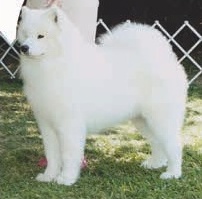
Color: Pure White, White and Biscuit, Cream, and All Biscuit. Any other colors are disqualified.
The Coat: The Samoyed is a double-coated breed with a soft thick wool undercoat, which provides warmth for the body, and a longer and harsher hair growing through it to form the outer coat, which is weather-resistant, stands straight out from the body, and should be free of curl. The outer coat protects and shields the undercoat from snow, and with a good shake a Sammy can remove the snow from its body. A droopy coat is undesirable. The quality of the coat should be considered more than the quantity. The silver tips on the coat that causes the coat to glisten with a silver sheen is actually caused by the hair shaft turning clear on the ends of the outer coat, and it enhances the Teflon effect of the outer coat in the snow. The female does not usually carry as long a coat as most males and it is softer in texture. The Samoyed should be pure white, white and biscuit, cream or all biscuit. Any other color is a disqualification.
The Tail: The tail should be moderately long, with the tail bone terminating approximately at the hock when down. It should be profusely covered with long hair. The tail was important to the dog’s survival on the tundra as the dog would curl up in a ball when sleeping, with the tail covering its muzzle and nose, helping to warm its breath while asleep. The tail should be carried forward over the back or side when alert, and is sometimes dropped when at rest. The tail should be mobile and loose… not tight over the back. The arch of the tail should balance out the arch of the neck when the dog is alert and standing at attention. A double hook is a fault. A judge should see the tail over the back once when judging.
The second breed characteristic that our JEC felt was part of the Essence of the Breed was Temperament. The Samoyed was an Arctic breed that was expected to work off-lead on the vast Russian tundra, herding Reindeer. It had to have sufficient intelligence to make split-second, independent decisions. For this reason, it was also required to work in harmony with other animals and with man. At night, the dogs sometimes slept in the chooms, or tents, with the tribal people. If a dog was a troublemaker and could not get along with others, it was eliminated, probably ending up in the stew pot or being worn as a fur hat, as nothing was wasted by the tribal people on the tundra. The standard states that the Samoyed should be intelligent, gentle, loyal, adaptable, alert, full of action, eager to serve, friendly but conservative, not distrustful or shy, and not overly aggressive. Unprovoked aggressiveness is to be severely penalized. The dogs and people were codependent on one another for survival on the tundra. For this reason, the Breed Standard reflects the original Arctic explorers’ observations of the tribal people with their dogs in respect to Temperament.
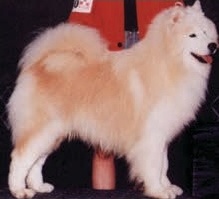
The third and final element that the JEC felt characterized the Essence of the Breed was Structure. The neck should be of good length, strong, and well-muscled. The neck should BLEND into the shoulder and topline with a graceful arch, and any other neck should be depreciated. An arched neck is thicker at the base and has stronger neck ligaments, which offers more power for the dog’s shoulder blades and front assembly while the dog is working. A ewe neck, for example, is positioned upright, perpendicular from the shoulder, and lacks any indication of an arch. This type of neck has weaker neck ligaments, and because of that weakness, has less support for the shoulder blades and front leg muscles. While this type of neckline might appear flashy in the show ring, it does not offer optimal functionality for a Working Dog.
The chest should be deep, with the ribs well-sprung from the spine and tapering at the sides to allow movement of the shoulders and freedom for the front legs. The chest should be heart-shaped and not barrel-shaped. Perfect depth of the chest should be at the point of the elbow, and the deepest part of the chest should be behind the forelegs, which provides more heart and lung room for working on the tundra. As breeders, we also like to feel “elbow pockets,” which are slight indentions in the rib cage under the elbows that allow more freedom of movement for the front legs without causing the Samoyed to move out at the elbows.
The shoulders should be long and sloping with a layback of 45 degrees. Also, check the upper arm, which should be approximately the same length as the shoulder blade. The withers separation, which indicates the lay-in of shoulder, should be 1 – 1-½ inches wide, or two to three fingertips apart, depending on the width of your fingers. The lay-in of shoulder tends to influence how the dog will put its front feet on the ground when in motion, and generally a Samoyed whose shoulders are not laid-in towards the spinal column will not converge into a single track when moving. The shoulder angles and lay-in of shoulder contribute to the dog’s endurance while working in the large open spaces of the tundra.
Next, run your hand down the front of the chest where you should be able to feel the prosternum. The legs should be parallel and straight to the pastern, and approximately 55 percent of the dog’s height at the withers. Length of leg is important when working in the deep tundra snow. You will need to push the hair back on the chest at the elbow to determine the true length of leg, since this is a double-coated breed. Pasterns should be strong, sturdy, and flexible, with some “spring” for proper let-down of feet.
The withers form the highest part of the back. Run your hand down the back from the withers to the loin to make sure it is level and not roached or dipped. The loin is the distance between the last rib and the pelvis, and should be strong, slightly arched, and neither long nor short-coupled. The croup must be full and slightly sloping to the tail root.
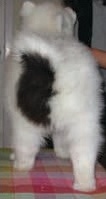
Upper thighs should be well-developed. Palpate the upper portion of the thigh behind the stifles to check the muscle mass. Stifles should be well-bent... approximately 45 degrees to the ground. Hocks should be well-developed and set at approximately 30 percent of the hip height. Straight stifles are objectionable; double jointed hocks or cowhocks are a fault. Cowhocks should only be determined after a dog has had the opportunity to move.
The Samoyed should trot, not pace, and should move with a quick, well-timed side gait! The gait should be free, BALANCED and VIGOROUS, with good reach in the front and equally good driving power in the rear. The back, or topline, should remain strong, firm, and level, without a lot of up-and-down motion. If there is more reach than drive, or more drive than reach when viewed from the side, then it is not a balanced animal. This affects endurance when working on an open tundra.
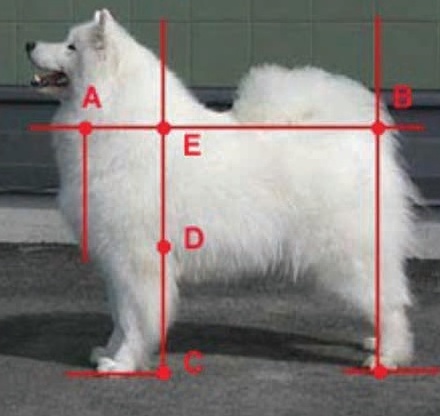
Torso: A to B 5% longer than E to C E to D 45% of height D to C 55% of height
The Samoyed should also single-track on the down and back. Moving at a slow walk or trot, it will not single-track, but as speed increases, the legs gradually angle inward until the pads are finally falling on a line directly under the longitudinal center of the body. This results in an efficient gait that can be maintained for hours. If you move a single-tracking dog through snow, it will leave one line of pawprints in the snow, instead of two.
So, to summarize, our SCA Judges Education Committee concluded that the Essence of the Samoyed Breed is three-fold: The essence of our breed consists of Type, Temperament, and Structure… all elements originally shaped by the environment and by evolution. Any two of these elements without the third would not constitute a good representation of the breed. A good representative of the breed must have all three elements. Like its ancestors, the Samoyed today is a versatile and diverse breed… if you strive to find the Essence of the Breed in your judging, or breeding program, you will be on the right path towards preserving the integrity of the Samoyed Breed for future generations to enjoy!
ABOUT THE AUTHOR
Carol Hjort and her husband, Andy, have owned Samoyeds for 45 years and established Jubillie Samoyeds in 1978. Avid Samoyed fanciers, Andy and Carol have bred and shown a number of Samoyeds to their Championships, personally handling some to Breed, Group, and All-Breed Best in Show and Best in Specialty Show wins or placements, including two Samoyeds that they imported from Great Britain, and via frozen semen, from Australia.
Although Carol’s focus in the sport has primarily been exhibiting in conformation, she has had the honor of judging Samoyed Sweepstakes at eight Regional Specialties around the country, as well as judging the Puppy Futurity at the 2012 SCA National Specialty, the Elements of the Standard at the 2016 SCA National Specialty, and the Carolina Working Group Association Sweepstakes in 2021. She served for a total of ten years intermittently on the SCA Board of Governors and has also served over the years as a Chairperson for various SCA National Specialty Committees. Carol has spent a cumulative total of 16 years on the SCA Judges Education Committee, working under five different Chairs, serving the past two years as Committee Chairperson. Over the years, she has written a number of articles on the Samoyed for various national all-breed publications and she’s covered the Westminster KC Dog Show for 15 years for Hoflin Publishing. It is Carol’s hope that you enjoy this article and are able to take with you an appreciation and better understanding of the essence of this beautiful and very ancient breed... the Samoyed!


EGO IS
THE ENEMY
A BOOK REVIEW
I recently attended the Local Chamber of Commerce luncheon where Tony Vitello, the head coach of the University of Tennessee baseball team, was the featured speaker. Vitello is a highly successful coach who has been in his position at Tennessee since 2017. At UT, he has been selected as a two-time National Coach of the Year. His 2022 team was the SEC Champion while his 2021 and 2023 teams reached the College World Series in Omaha, Nebraska. Also, during the past six seasons, 35 former UT players have been selected in the MLB draft.
Coach Vitello provided an interesting insight into teamwork and the motivation and molding of individuals into a successful team. As in many sports, as young people grow, mature, and refine their skills, the number who enjoy success and advance up the ranks through college and on to the professional level is very small. Most of these athletes come from the high school ranks where their abilities made them the big man on campus and where their peers, in many cases, looked up to them and watched as, in some cases, their egos grew accordingly. Vitello expressed to the people in attendance that in the locker room and on the field, it was the teams that could work together and check their egos at the door that seemed to be the ones that enjoyed the most success. Camaraderie and support of each other, as well as learning to play and have fun together while respecting one another, are important parts of teamwork.
During his comments, Coach Vitello spoke about a book that was suggested to him. The book is titled, Ego Is the Enemy, by Ryan Holiday, which, in his opinion, was a good reference source that also provided insight into dealing with and understanding not only himself but his players and others alike.
As someone who enjoys reading and learning new things, following the luncheon I went online and ordered a copy of the book from Amazon. From start to finish it is a very easy read, filled with a ton of insight into the human ego. In the book, you will find many lessons to help you master success in life that many people with an insatiable ego find difficult to navigate. In today’s world where everyone wants instant success, the book helps us understand that real success comes from the journey and lessons learned along the long and winding road of life.
In life and in competition, we have all met or know someone who displays that obnoxious type of high ego whereby their self-promotion and declaration of superiority can be offensive to their peers and fellow competitors.
All of us who compete in our sport at any level or discipline have some form of ego in our desire to succeed and accomplish our goals.
Understanding our ego and learning how to control it takes time and insight. Ego Is the Enemy helps us to recognize certain life factors and put them in perspective.

The book is broken into three sections: Aspire, Success, and Failure. It is full of stories and anecdotes from people like Aristotle, Orson Welles, General George Marshall, President Ulysses S. Grant, Ralph Waldo Emerson, Ben Franklin, President Richard Nixon, Jackie Robinson, General and President Dwight D. Eisenhower, Ghengis Khan, and John Wooden, to mention a few.
Our ego can have a direct relationship to the success and failures in our lives, and the book’s three sections truly provide us with relatable insights and stories that can help us understand the journey. All three sections start with a quote related to the section.
Aspire: “To whatever you aspire, Ego is your enemy…”
The mini-chapters are titled: “Talk, Talk, Talk,” “To Be or to Do?” “Become a Student,” “Don’t Be Passionate,” “Follow the Canvas Strategy,” “Restrain Yourself,” “Get Out of Your Own Head,” “The Danger of Early Pride,” “Work, Work, Work,” and “For Everything that Comes Next, Ego Is the Enemy.”
Success: “To whatever success you have achieved, Ego is the enemy…”
Part two of the story is broken down into nine parts: “Always Stay a Student,” Don’t Tell Yourself a Story,” “What’s Important to You?” “Entitlement, Control, and Paranoia,” “Managing Yourself,” “Beware the Disease of Me,” “Meditate on the Immensity,” “Maintain Your Sobriety,” and “For What Often Comes Next, Ego Is the Enemy.” Failure: “To whatever failure and challenges you will face, Ego is the Enemy…” The final of the three principles is Failure and the seven sections are: “Alive Time or Dead Time?” “The Effort Is Enough,” “Fight Club Moments,” “Draw the Line,” “Maintain Your Own Scorecard,” “Always Love,” and “For Everything that Comes Next, Ego Is the Enemy.”
In the reviews section, The Honorable Frederic Block, a U.S. District Judge and author said, “What a valuable book for those in positions of authority! It has made me a better judge.”
Our history books tell us tales of visionaries who remade the world with tremendous and often irrational force. At the same time, we have also experienced those highly successful people who fought their egos daily, stayed out of the spotlight, and put their higher goals above themselves, their egos, and the great desire for recognition.
In my opinion, this book can provide each person who takes the time to read it with a new perspective on themselves and a better understanding of the many others they encounter in daily life. Understanding the human ego and how to manage and keep it under control is the basic and compelling nature of the book.
I also believe it is a book that showcases the importance of fairness and humility. We have all met boastful exhibitors and judges who express that, in their opinion, their dogs or their opinions are better and sought out more frequently than those of others.
Let’s face it, all of us as humans want to be respected by our peers as well as enjoy a level of success in our lifetime endeavors. At the same time, we need to be cognitive of how our behavior affects others.
Try to remember that EGO can be the enemy that keeps you from achieving those goals.


THE PUG
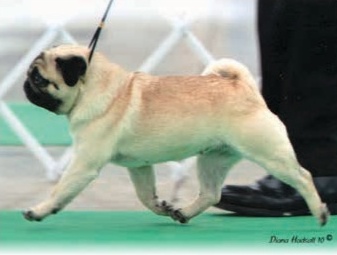
T oday, the Pug is renowned as a superb companion. He is often portrayed in print media, on television, and in film as a happy, loving member of the family, which is a true depiction of the breed. With a background typical of an Oriental breed, the Pug has been loved and adored through centuries and today his popularity is at an all-time high. In 2014, 203 Pugs received their AKC Championships; 71 went on to Grand Champion status. In the Obedience ring, Pugs made their presence known as well: Ten Pugs attained their CD and three their CDX! The Pug was officially recognized by AKC in 1885; in 2014, Pugs were ranked No. 32 in popularity out of 178 breeds and varieties [In 2023, Pugs were ranked No. 36 out of 200 breeds and varieties.
—Ed.]—although for Pug fanciers he will always be No. 1. The Pug loves his family but is also friendly with others, especially babies. His pink tongue is always ready to give kisses and he loves cuddles. Not the most easily trained, many have been very successful in Obedience and as Therapy Dogs.
This is a breed meant only for companionship. He does not hunt, track, retrieve, point, or herd. He enjoys a rough tumble or a quiet snooze on the couch with his person. He is protective of his turf and will alert you to strangers approaching.
As a family pet, he usually attaches himself to the person feeding him but will share his affections. Pugs are very good eaters and one must be careful of overfeeding, as it is hard to resist those great big, black, pleading eyes. Perhaps the worst thing that could happen to a Pug is to be ignored. They enjoy routine, and once they understand yours they will want to participate on every level. They are highly attuned to your moods and will comfort you in times of sadness.
Most Pugs in the classes are shown by their owners and often their breeders. They are little clowns and will not always stand perfectly on the table. Do not expect them to, because that bubbling personality is a large part of their charm. They are very sensitive to their eyes being covered during a table exam and are especially unhappy with a heavy-handed mouth exam. A slightly undershot bite can be determined by a visual exam or a light touch outside the mouth. The biggest complaint exhibitors have is with the bite exam and having a heavy hand on these Toy dogs.
The Pug is the largest dog in the Toy Group—and his many admirers will argue that he also has the largest heart.


CONTENTS
Done